 Basehand
Bookings
How to cut no-shows without upsetting your regulars
An empty chair costs you the whole appointment. How reminders, confirmations, deposits, and a fair cancellation policy work together to keep your calendar full.
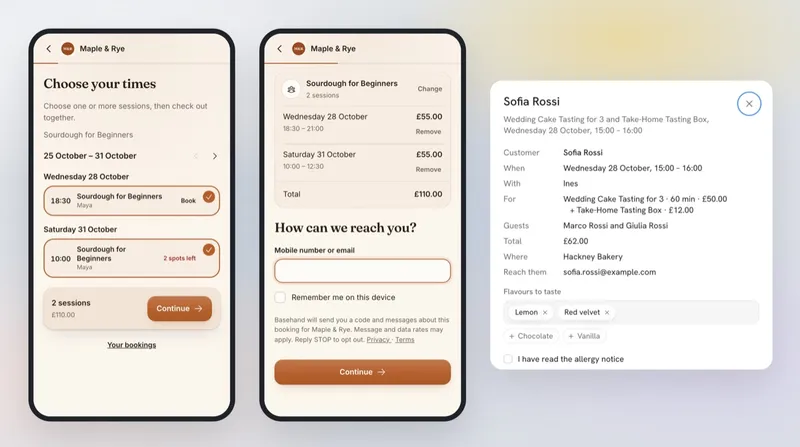
A no-show rarely means a customer doesn't care. Usually they forgot, their plans changed, or they couldn't face the phone call to cancel. Each of those has a fix, and none of them needs you to be strict with the people who keep you in business.
The cost of a no-show is easy to underestimate. It isn't only the price of the appointment. It's the time you set aside, the customer you turned away because you were full, and sometimes the staff you paid to be there. A business with a few no-shows a week is losing a full day's work every month or so.
The fixes below build on each other. Start with the first and add the rest as you need them.
Start with a reminder
The cheapest fix is the one many businesses skip. Send a reminder before every appointment, by email and by text, with the time, the address, and an easy way to reschedule. A lot of no-shows are simply people who forgot, and a reminder catches them while there's still time to fill the slot.
The day before works for most appointments. For something booked weeks ahead, a second reminder a week out gives people time to rearrange. For short notice bookings, a reminder a few hours before may be enough.
Keep it short. The customer should be able to read it at a glance on a lock screen: who, when, where, and how to change it.
Ask them to confirm
A reminder tells. A confirmation asks. For long or expensive appointments, ask customers to confirm they're coming, with a button in the email or a reply to the text.
The point isn't the people who confirm. It's the ones who don't. Those are the customers to call, and you learn about a cancellation while you can still offer the time to someone else.
Make cancelling easy
This sounds backwards, but it works. If cancelling means a phone call during your busiest hours, some customers will just not turn up instead. A link to cancel or move the booking turns a no-show into a free slot you can fill.
Set a cutoff that suits your business, such as 24 hours before. Customers can change their plans freely until then, and after it they know to call you.
Take a deposit where it matters
A deposit changes how a booking feels. Once someone has paid something, they plan around it. You don't need one for everything. Use them where an empty slot hurts most:
Long appointments, such as color, massage, or a first consultation
New customers you haven't met yet
Your busiest times, such as Saturdays or the weeks before a holiday
Anything you have to prepare or buy materials for in advance
Take the deposit when they book online, so nobody has to chase it, and count it toward the final price. Customers rarely mind a deposit when it's explained and taken off the bill. The same idea works for bigger jobs, as our guide to getting paid on time explains.
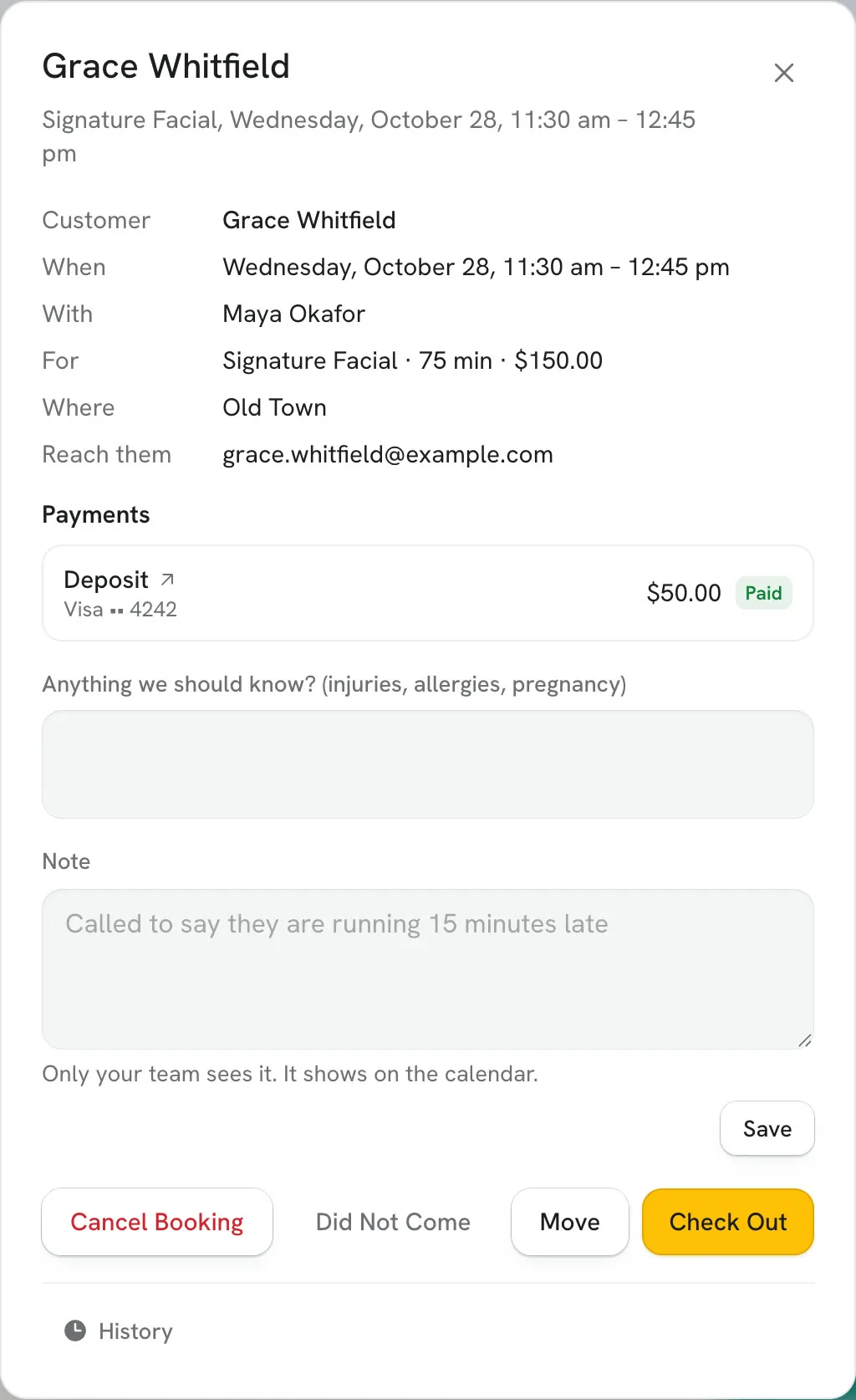
A $50 deposit paid when the customer booked online. The rest is paid at checkout.
An alternative to a deposit is keeping the customer's card on file. They pay nothing up front, but you can charge a fee if they cancel late or don't come.
Write a cancellation policy you'd accept yourself
A fair policy is clear about three things:
How much notice you need to cancel or move
What happens with less notice than that
What happens if someone doesn't come at all
Show it on your booking page, before anyone books, and repeat it in the confirmation. A fee nobody was told about feels like a trick, even when it's fair.
A good policy is one your best customer would read and think is fair.
When it comes to charging a fee, use judgment. A regular who missed their first appointment in three years after a family emergency is not the same as someone who has missed three this year. The policy is there to protect your time, not to collect fees.
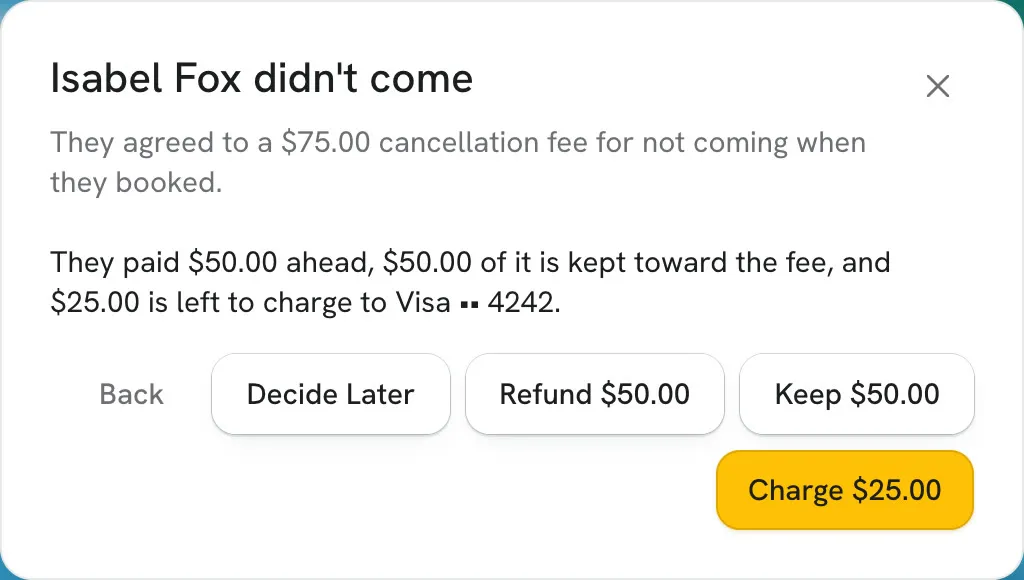
When someone doesn't come, the choice stays with you: charge the fee, keep what they paid, refund it, or decide later.
Fill the gap when it happens anyway
Some no-shows will still happen. Have a way to fill the gap quickly. For classes and events, a waitlist lets the next person take a spot that opens. For appointments, keep a short list of customers who've asked for an earlier time, and contact them when a slot opens.
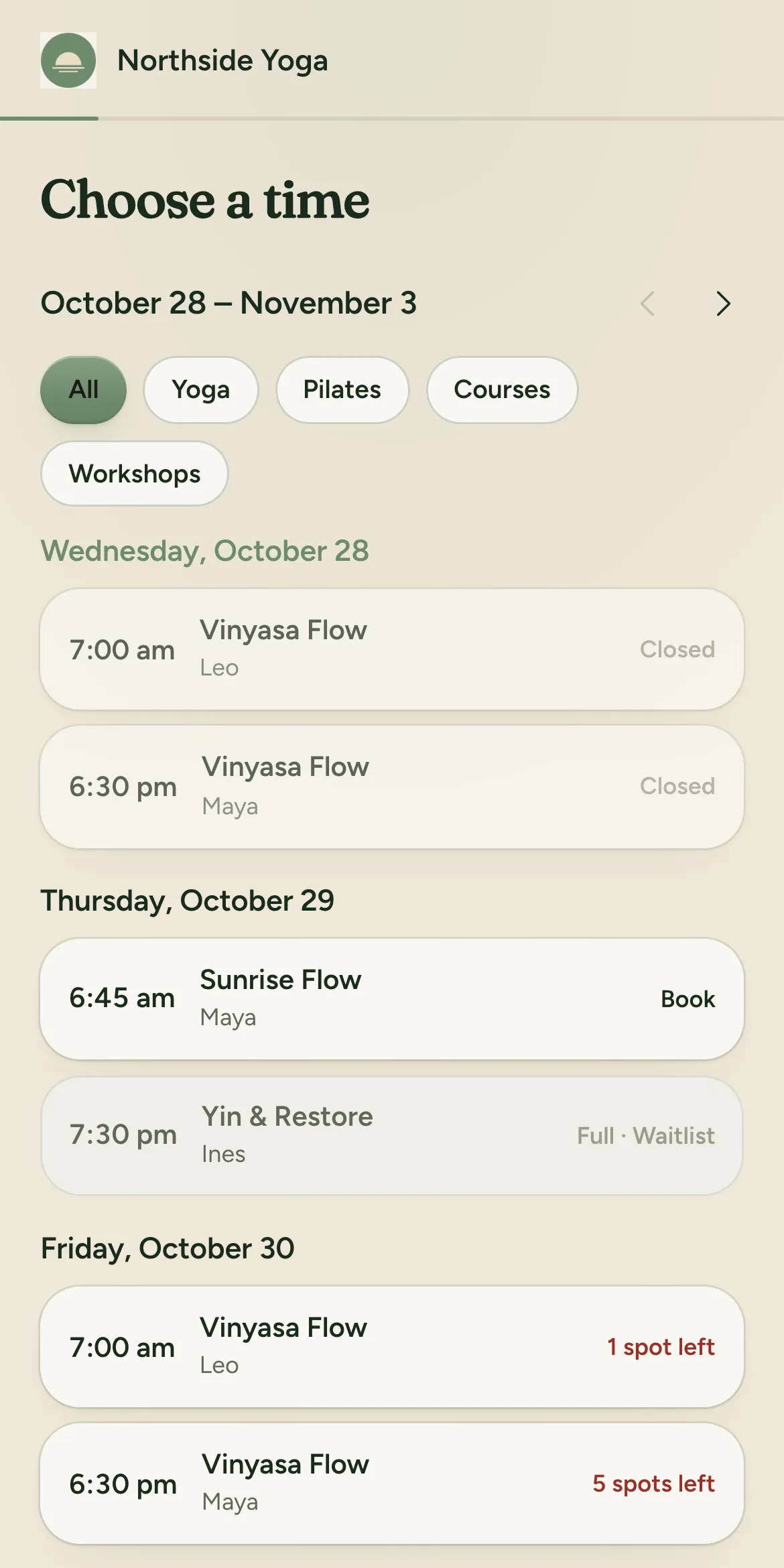
A full class takes names for a waitlist instead of turning people away.
Track who misses appointments
Keep a note when someone doesn't turn up. Most people never miss twice. For the few who do, you might ask for a deposit next time they book. That's fairer than putting a deposit on everyone because of a handful of people.
Messages and a policy you can copy
Copy any of these and change the words in square brackets. Keep the messages about as short as they are here.
Appointment reminder by text
Hi [first name], a reminder of your [service] at [business name] on [day] at [time]. We're at [address]. Need to change it? [link] or call [phone].
Reminder that asks them to confirm
Subject: Please confirm your [service] on [day]

Hi [first name],

You're booked in for [service] with [staff name] on [day, date] at [time].

Could you let us know you're still coming? Just reply YES to this email, or use the link below to move or cancel.

[link to confirm, move, or cancel]

If you need to cancel, please do it by [time] on [day], so we can offer the time to someone else.

See you soon,
[your name]
[business name], [address]
Cancellation policy
Cancellations and missed appointments

We keep your appointment time just for you, so we ask for [24 hours'] notice if you need to cancel or move it. You can do that from the link in your confirmation, or by calling us at [phone].

If you cancel with less than [24 hours'] notice, we may charge [a fee of $X / X% of the price of the service / your deposit].

If you miss your appointment without telling us, we may charge [a fee of $X / the full price of the service / your deposit].

Deposits count toward the price of your visit.

We know things come up. If something unexpected happens, call us and we'll talk it through.
Message after a missed appointment
Hi [first name], we missed you at your [service] today at [time], and we hope everything's all right. If you'd like another time, you can book here: [booking link]. [As our cancellation policy says, a fee of $X applies to missed appointments.]
How Basehand helps
Basehand sends reminders for every appointment, however it was booked: by email, and by text to numbers in the US, Canada, and the UK. You choose one or two times to send them, from a week before to an hour before, and none go out overnight. You can also ask customers to confirm. Email reminders get a Confirm button, and customers in the US and Canada can reply CONFIRM to the text.
Customers who booked online can move or cancel from a link, up to a cutoff you choose. Your cancellation terms show above the Book button.
Once you take payments, you choose for each service whether customers pay at the visit, pay in full, pay a deposit, or keep a card on file, and you can set a cancellation fee. A customer cancelling online after the cutoff can only do so by accepting the fee. When someone doesn't turn up, you decide whether to charge the fee, keep what they paid, or refund it. Basehand never decides that for you.
For classes and events, a waitlist tells everyone waiting when a spot opens, and the first to claim it gets it. Read more about online booking and taking deposits and payments.